
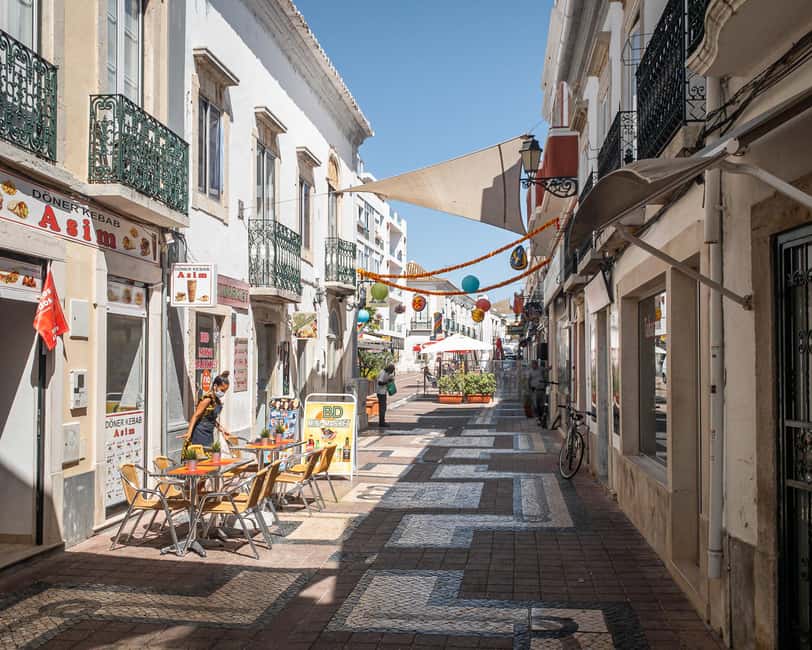
Reviewed · FARO CITY & OLD TOWN
Faro: Flexible Walking Tour in Historic Center
Faro is best on foot with your phone. This self-guided Walkbox route strings together medieval streets and major viewpoints, with stories that play as you walk. I like that the Walkbox app works offline, so you can keep moving without hunting for signal.
Two stops really made me happy: the sequence of historic churches (including Carmo Church and the Ossos Chapel) and the effort-free way you still reach big views by climbing the Cathedral Bell Tower. One thing to consider: the on-screen mapping can feel unreliable, so don’t trust it blindly—use the audio cues and street landmarks to stay oriented.
You can start when it suits you, do it all in one go or in pieces, and finish back at the estuary near Largo de São Francisco. For a low price point, it’s a smart way to explore Faro’s Old Town without committing to a fixed group schedule.
In This Review
- Key highlights to look for
- Walking Faro by the Walkbox app (offline and at your pace)
- Starting at Largo de São Francisco and the estuary gateway
- Walled Old Town and King Afonso III Square
- Carmo Church, São Pedro, Ossos Chapel, and Santo António dos Capuchos
- Baixa de Faro’s cobblestones and the shop-street pace
- Marina views from the Eva Hotel rooftop and the calm at Manuel Bívar Garden
- Largo da Sé, Faro Cathedral, and climbing the Bell Tower
- Porta Nova to the estuary: finishing strong without rushing
- Price, smartphone planning, and the map reality check
- Who should book this Faro walking tour?
- Should you book this Faro walking tour?
- FAQ
- How long is the Faro walking tour?
- Does it work with an offline phone?
- What languages are included?
- Where does the tour start and end?
- Can I do the tour in parts?
- Are tickets included for paid attractions?
- Is it suitable for mobility impairments?
Key highlights to look for

- Offline, auto-playing audio in English, Portuguese, French, and Spanish
- 40+ points of interest across a roughly 3 km walking route
- Church trail: Church of São Pedro, Carmo Church, Ossos Chapel, and the Convent of Santo António dos Capuchos
- Rooftop + garden breaks with marina views and a calmer pause at Manuel Bívar Garden
- Faro Cathedral + Bell Tower climb for sweeping city and estuary vistas
- Flexible timing: full route or partial segments within 5 days of booking
Walking Faro by the Walkbox app (offline and at your pace)
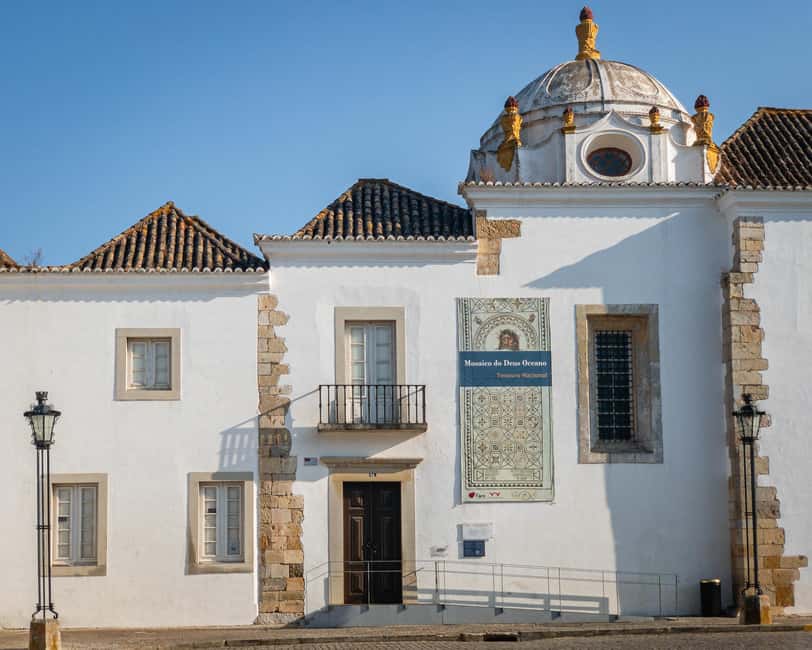
This is a self-guided walking tour built around the Walkbox app, which means you’re not waiting on anyone else. You follow a route, and the audio guide plays automatically as you reach each stop. That works especially well in a city like Faro, where the best moments often happen in between the big landmarks—on a quiet corner, a line of old walls, or a sudden view toward the marina.
What I like is the practical mix of walking-friendly design and real guidance. The app provides content in four languages, so if you’re traveling with people who don’t share your language, you can still keep the pace together. It also works offline, and that’s a big deal in Portugal—signal can be fine, but it’s nice not to gamble.
You’re given clear instructions after booking, plus remote support by WhatsApp or SMS between 8:00 AM and 8:00 PM if you hit a snag. There’s also emergency assistance by phone, which is reassuring when you’re walking a route you’re learning as you go.
Expect about 3 hours for the full walk (depending on your stops and pace). The route is easy to follow in concept, but you’ll still want to stay alert, because one of the drawbacks people run into is getting lost when the map view doesn’t match what they see on the street.
Read more of our walks through Faro's old town and the lanes of Faro.



Starting at Largo de São Francisco and the estuary gateway
Your walk begins and ends near the estuary entrance to the historic center, close to Largo de São Francisco car park. This is a good starting point because you begin in Faro’s eastern quarter, where the city’s layout funnels you naturally toward the Old Town.
Before you start, do the boring-but-important thing: charge your smartphone. You’ll be using the app for the audio guide, and you’ll want it to stay alive for the whole route. Comfortable shoes matter too, because Faro’s historic streets include cobblestones and tight passages that can feel slower than you expect.
Once you get going, the route sets up a clear progression. You’ll move from the walled medieval feeling of the Old Town toward open squares, then into Baixa de Faro’s street level shops, and later back toward the estuary for the finale. That structure helps you keep your bearings, even if you have to pause and re-check where you are.
It’s also worth noting that the tour isn’t suitable for mobility impairments, so if that applies to you, you’ll want a different plan.
Walled Old Town and King Afonso III Square
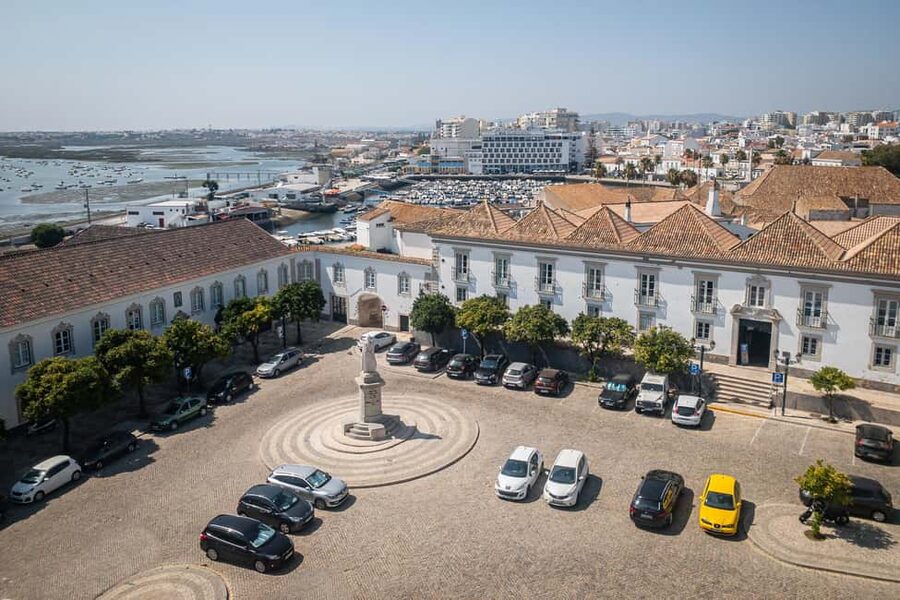
After you start near the estuary, the route leads you into the medieval walled Old Town. This is one of those places where the walls matter more than you might think on a map. As you walk, you start to feel how Faro protected itself—and how the old town’s streets developed inside those boundaries.
You’ll then reach King Afonso III Square, a central moment that breaks up the walking with open space. Squares like this are where locals tend to linger, and it’s a good spot to reset your pace and check your phone if you need to. If you’re the type who likes to stop for photos, this is a more relaxed place to do it than narrow alleyways.
Next comes a key transition: you’ll exit through Arco do Repouso into Baixa de Faro. Think of this as moving from “walls and old streets” to “everyday city center.” The arch helps you understand the city’s layers without you having to read a guidebook first.
And this is the general rhythm you’ll follow throughout: the audio guide doesn’t just name places, it helps you connect them in a walking sequence.
Carmo Church, São Pedro, Ossos Chapel, and Santo António dos Capuchos
One of the strongest parts of this tour is the church run. You’re not only hitting landmarks—you’re moving through a theme: the religious architecture that shaped Faro over time, from neighborhood churches to more distinctive sites.
You’ll pass Church of São Pedro first, then reach Carmo Church. Carmo Church is one of those stops you’ll feel immediately, because it’s the kind of building that makes you slow down. The audio guide adds context so you can look beyond the obvious facade and notice what makes it stand apart.
Then comes Ossos Chapel. This isn’t a “sit and relax” kind of stop. It’s memorable, and it tends to pull your attention in a different way than typical churches do. If you’re sensitive to that kind of visual, go in prepared and take your time rather than rushing for the sake of the route.
After that, you’ll visit the Convent of Santo António dos Capuchos. Convents tend to be quieter and more atmospheric than busy public squares, and this stop is a good contrast point after the more intense Ossos Chapel experience.
A practical note: some attractions along the route may require tickets. The tour includes prices and opening hours where applicable, but you’ll still need to handle paid entry yourself. I like having that information baked into the plan, because it helps you decide whether to commit right then or swap order if something is closed.
Baixa de Faro’s cobblestones and the shop-street pace
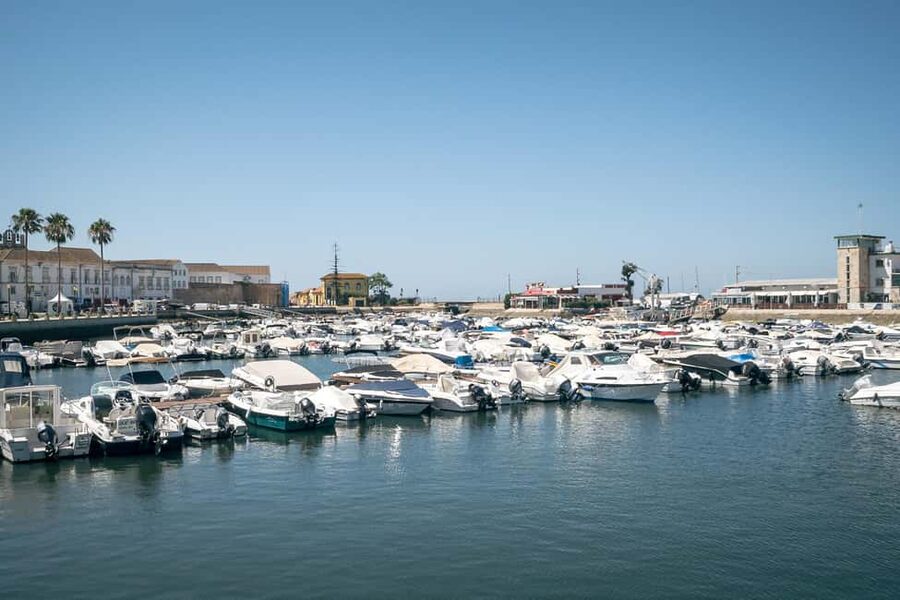
Once you enter Baixa de Faro, the vibe shifts. You’re walking cobblestone streets lined with shops, and you’ll feel more “city life” here than the Old Town’s enclosed medieval atmosphere.
This section is valuable even if you’re not shopping. It’s where Faro feels lived-in, where you can pop into a café for a quick break, and where the streets themselves become the attraction. The audio guide keeps you moving through key points, but the slower tempo of Baixa makes it easy to stop for small things—street views, people-watching, and short photo breaks.
The transition back toward the Old Town happens later, so enjoy this stretch as your reset zone. If the idea of a strict timeline annoys you, this is where you’ll appreciate the flexibility. You’re allowed to do the full experience in one walk or break it into parts within your 5-day window.
And if you’re trying to fix your route when the map gets confusing, Baixa is often easier to navigate because it’s more street- and shop-sign focused.
Take a look at more guided walks winding through Faro.



Marina views from the Eva Hotel rooftop and the calm at Manuel Bívar Garden
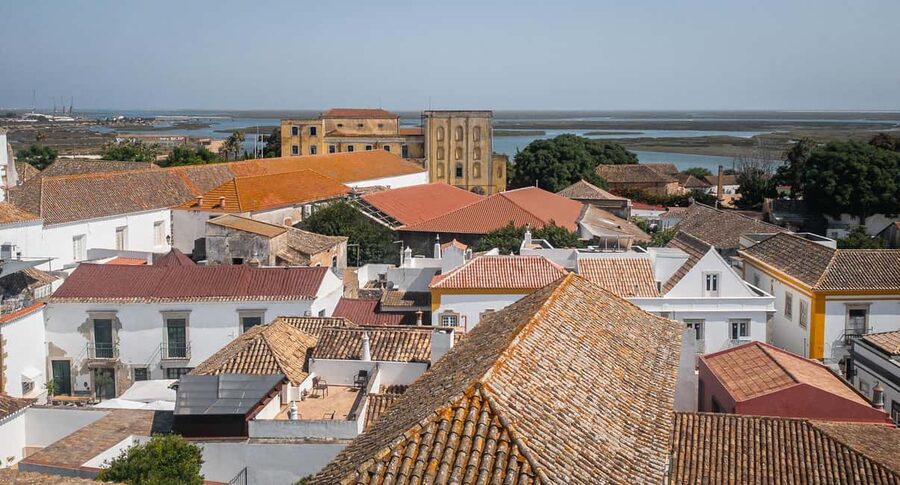
Faro’s waterfront is part of why the city is so pleasant to explore. This tour brings you close to that atmosphere with stops that give you perspective over the marina.
One standout viewpoint is the panoramic stop from Eva Hotel’s rooftop. This is a nice change from looking at streets at eye level. Up top, you can take in the spread of the marina area and reconnect your mental map of where you are in the city.
Then you’ll pass Manuel Bívar Garden, which is a good breather. Gardens can sound like “just a pause,” but they’re actually useful on a walking tour. They give you a less hectic environment where you can step back, catch your breath, and prepare for the more landmark-dense section near the Cathedral.
If you’re traveling on warmer days, this is also where you’ll likely slow down naturally. Use the break. Refill water if you can find a place nearby, and don’t feel guilty about taking a few extra minutes here. The route is designed to feel flexible, not rushed.
Largo da Sé, Faro Cathedral, and climbing the Bell Tower
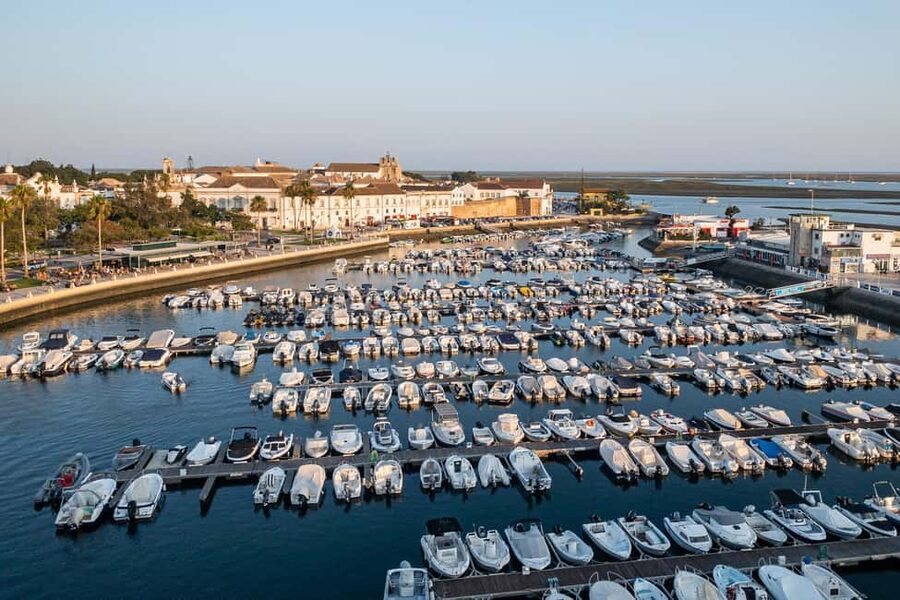
The heart of the later part of the walk is Largo da Sé, where the focus turns to Faro’s civic and religious landmarks. You’ll come across the Episcopal Palace and Town Hall as part of the surrounding scene, which helps you understand that this isn’t just one church—it’s a whole area where important city functions gathered.
Then it’s Faro Cathedral time. Take your time here because the audio guide gives you a reason to look closely, not just a reminder that the building exists. If you only glance and keep going, you’ll miss what makes the Cathedral stop worthwhile.
The main “work for the view” moment is climbing the Bell Tower. You’ll get sweeping views of the city and the estuary from up high. This is the kind of payoff that makes the walking feel worth it, especially if you’ve been in streets and smaller lanes for most of the walk.
Timing helps. If light is good, the estuary view looks better. If it’s hot or windy, you’ll still get your reward, but you’ll probably want a shorter climb and quicker photos.
Porta Nova to the estuary: finishing strong without rushing
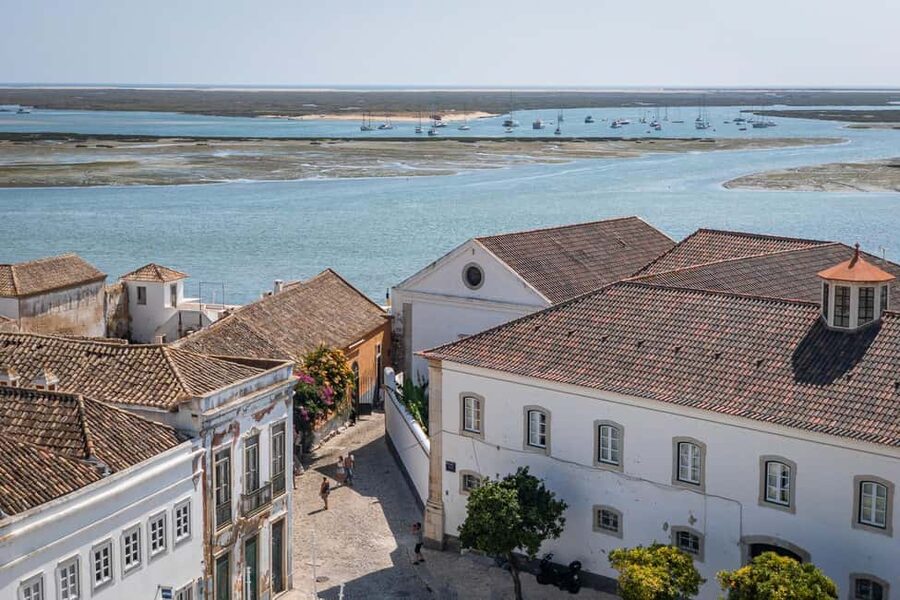
To end, you leave the Old Town through Porta Nova and then stroll along the estuary back toward your starting point near Largo de São Francisco. This finale is smart because it gives your legs an easy shift from stone-and-stairs feel to a calmer walk.
The estuary edge helps you “close the loop.” After hours of churches, arches, and squares, seeing the waterline again turns everything you walked into one coherent picture. It also feels natural to stop for a drink or snack at the end, because you’re back near where you started.
If you’re the type who likes to keep a tour moving, this ending still works. There’s enough interest along the way to feel like it’s part of the tour, but it doesn’t force you into constant intense stops.
Price, smartphone planning, and the map reality check
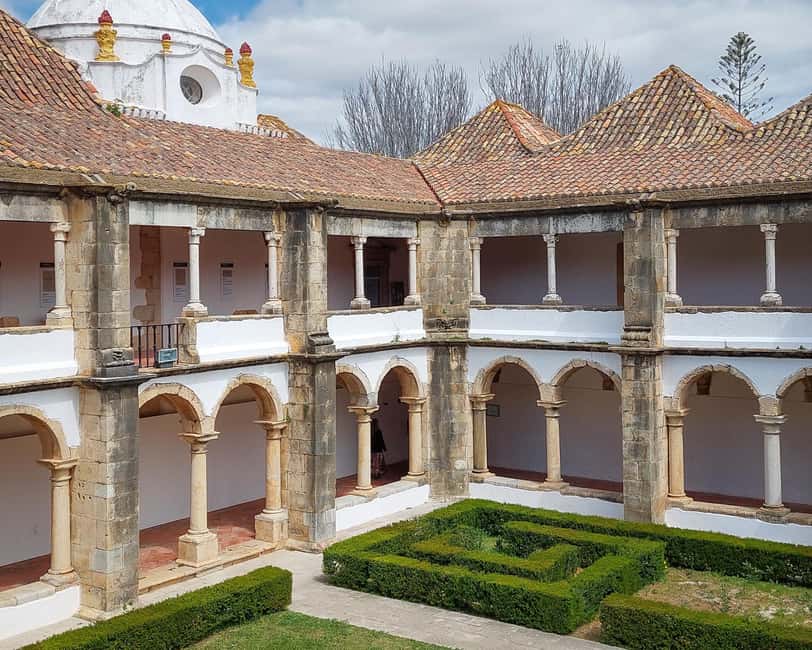
At $8 per person, this tour is genuinely good value if you like independence and want structure without paying for a live guide. You’re getting a multi-language offline audio guide, a planned route with 40+ points of interest, and information on opening hours and prices for stops that may cost extra. For many people, that combination beats spending time piecing together your own itinerary from separate sources.
But the biggest practical detail is smartphone planning. You have to book based on the number of smartphones used, not the number of people. So if you’re traveling with a friend and you’ll share one phone, you’ll want to reflect that when you book.
One more reality check: some folks found the map difficult to follow and felt constantly lost. I’d treat that as a warning sign, not a deal-breaker. Here’s how I’d protect yourself:
- Use the audio cues as the main navigation, not the moving map.
- When you pause, look for obvious markers like arches (Arco do Repouso, Arco da Vila, Porta Nova) and square names (King Afonso III Square, Largo da Sé).
- If you have to, use your phone’s general navigation as a backup tool while still listening to the guide.
If you like tech-supported wandering but hate friction, this might still feel smooth for you—just don’t assume it will be perfectly turn-by-turn.
Who should book this Faro walking tour?
Book this if you want flexible timing, you’re happy to explore at your own pace, and you like the mix of churches, old-town walls, and viewpoints. It’s especially fitting for visitors who want to see a lot without arranging a schedule around a group.
You’ll also like it if you travel in multilingual groups. The app’s content covers English, Portuguese, French, and Spanish, so it’s easier for everyone to follow the same walk.
Skip it or plan differently if you need mobility-friendly routing, or if you strongly dislike any scenario where you might need to reorient yourself on the street.
Should you book this Faro walking tour?
I’d book it if you’re looking for a low-cost way to connect the dots between Faro’s Old Town, church landmarks, marina views, and Cathedral viewpoints—without being tied to a fixed departure time. The offline audio and multi-language support make it feel more “real” than a plain map.
I’d hesitate only if you know you hate smartphone navigation and can’t tolerate any uncertainty when it comes to finding your way. In that case, you’d probably feel better with a live guide or a different format.
FAQ
How long is the Faro walking tour?
The experience is about 3 hours, depending on your pace and which stops you choose to spend time on.
Does it work with an offline phone?
Yes. Walkbox works offline, and it provides audio guidance as you explore.
What languages are included?
The tour content is available in English, Portuguese, French, and Spanish.
Where does the tour start and end?
It starts and ends next to the estuary and the historic center entrance, near Largo de São Francisco car park.
Can I do the tour in parts?
Yes. You can do the tour in full or in parts within 5 days of your booking date.
Are tickets included for paid attractions?
Tickets to paid attractions are not included, but the tour includes pricing and opening hours information where applicable.
Is it suitable for mobility impairments?
No, it isn’t suitable for people with mobility impairments.
If you want, tell me when you’re visiting (morning vs afternoon) and whether you plan to climb the Bell Tower the same day—I can suggest a smart walking order around lighting and typical crowds.
More Tours in Faro





More Tour Reviews in Faro





More Faro Old Town Walks in Faro



Not quite it? Here is more to do along the Faro coast that we have reviewed











Faro City & Old Town, compared.
 ★ 5.0Faro City Tour on Electric Tuk tuksFrom $66114 reviews
 ★ 4.9Faro: Old Town Guided Walking Food TourFrom $10494 reviews
 ★ 5.0Highlights & Hidden Gems of Faro Private Tour78 reviews
 ★ 5.0Ride through Paradise: Faro Island Electric 2×2 bike TourFrom $10253 reviews
 ★ 4.9Faro City Portuguese Wine Tasting and Tapas Guided TourFrom $11147 reviews
 ★ 4.9Faro: City tourFrom $6134 reviews
 ★ 5.0Drinks & Bites in Faro Private Tour with a LocalFrom $11923 reviews
 ★ 5.0Faro City Portuguese TapasFrom $9016 reviews
Browse the lists this tour appears in